
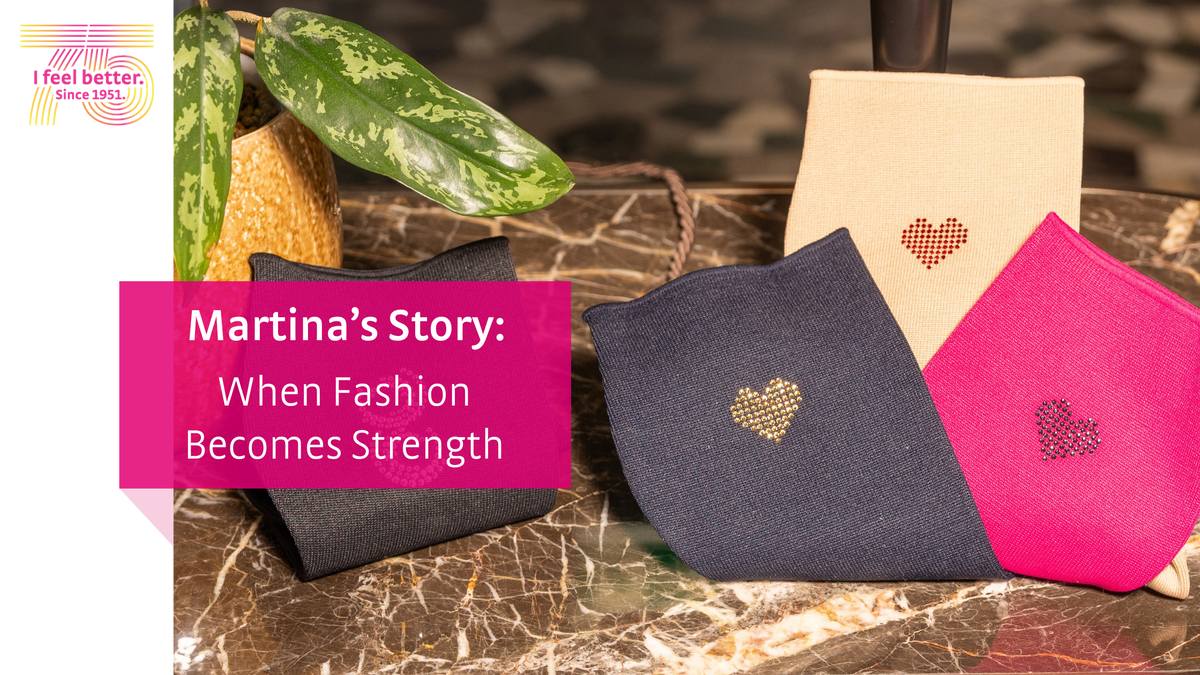
Martina Glomb grew up surrounded by fabric. Her father was a tailor who designed tents and equipment for Arctic expeditions. Her mother was a draughtswoman who drew plans for everything from buildings to engines. Some of her earliest memories are of sitting on a big cutting table, a horsehair cushion in her lap, practising her very first stitches.
It's no surprise she became a fashion designer and now teaches the next generation at Hanover University. She believes the heart of the craft is passion for people and materials. Never in a million years did she expect to need that passion in quite the way she did.
Facing Cancer Openly
When breast cancer came, Martina didn't hide it. She lost her hair and her eyelashes, and she chose to be open about it. If anyone raised the subject, she answered plainly: "I had breast cancer", as though it was already behind her.
That openness sat alongside a fierce hold on joy. Through every stage, including the hardest, Martina leaned on the things that had always lifted her. Clothes were more than a habit for her. They were a way of showing how she felt on the inside. "I have always dressed in brightly coloured clothes that matched my feelings."
So when lymphoedema meant she needed a compression sleeve, it was never going to be a small thing. For someone who had spent her whole life believing in what clothing can say, the question was bigger than comfort or fit. How do you wear something medical without letting it take over how you feel about yourself?
When the sleeve didn't match the woman wearing it
The first armsleeves she wore simply didn't match her attitude. They looked like what they were, a medical device, and Martina, who had spent her life making clothes people love, wasn't willing to let her treatment make her feel unwell every time she looked at her own arm.
So she did what designers do. She began turning the things that made her look ill into something she found beautiful. She embroidered her sleeve by hand. She'll tell you the result left a lot to be desired. But the instinct behind it was right.
"As patients, we accept the fact that we have to wear a medical device, but even I as a designer found it difficult to integrate the sleeve fashionably in my everyday life. But this aspect is so incredibly important: you want to cast your illness aside instead of thinking about the treatment all the time."
If you're living with lymphoedema after breast cancer, you may know that feeling well. You accept that you need your sleeve. You just want to feel like yourself while you wear it.
Compression on Your Own Terms
During her rehabilitation, she met many other patients, especially younger ones, who felt the same way. They were tackling their diagnosis and treatment head-on, and they wanted colour. They wanted their compression to look like an accessory, not a reminder.
Your sleeve doesn't have to fade into the background, and it doesn't have to be the thing that defines you. You're allowed to want something that feels like you. Bold colour, a pattern you'd never have picked before, or something quiet and classic are all fine, as long as it makes you feel like yourself.
Ready to find a sleeve that feels like you?
If you're ready to get into the more colourful side of compression, check out our new compression colours, patterns and crystals.
If you're not sure what's right for you, talk to your lymphoedema therapist or a healthcare professional about which garment suits your needs.
Always read the label and follow the directions for use.


Leave a comment
All comments are moderated before being published.
This site is protected by hCaptcha and the hCaptcha Privacy Policy and Terms of Service apply.